 Dossier

How Radisson Hotels' virtue signaling hurts real victims
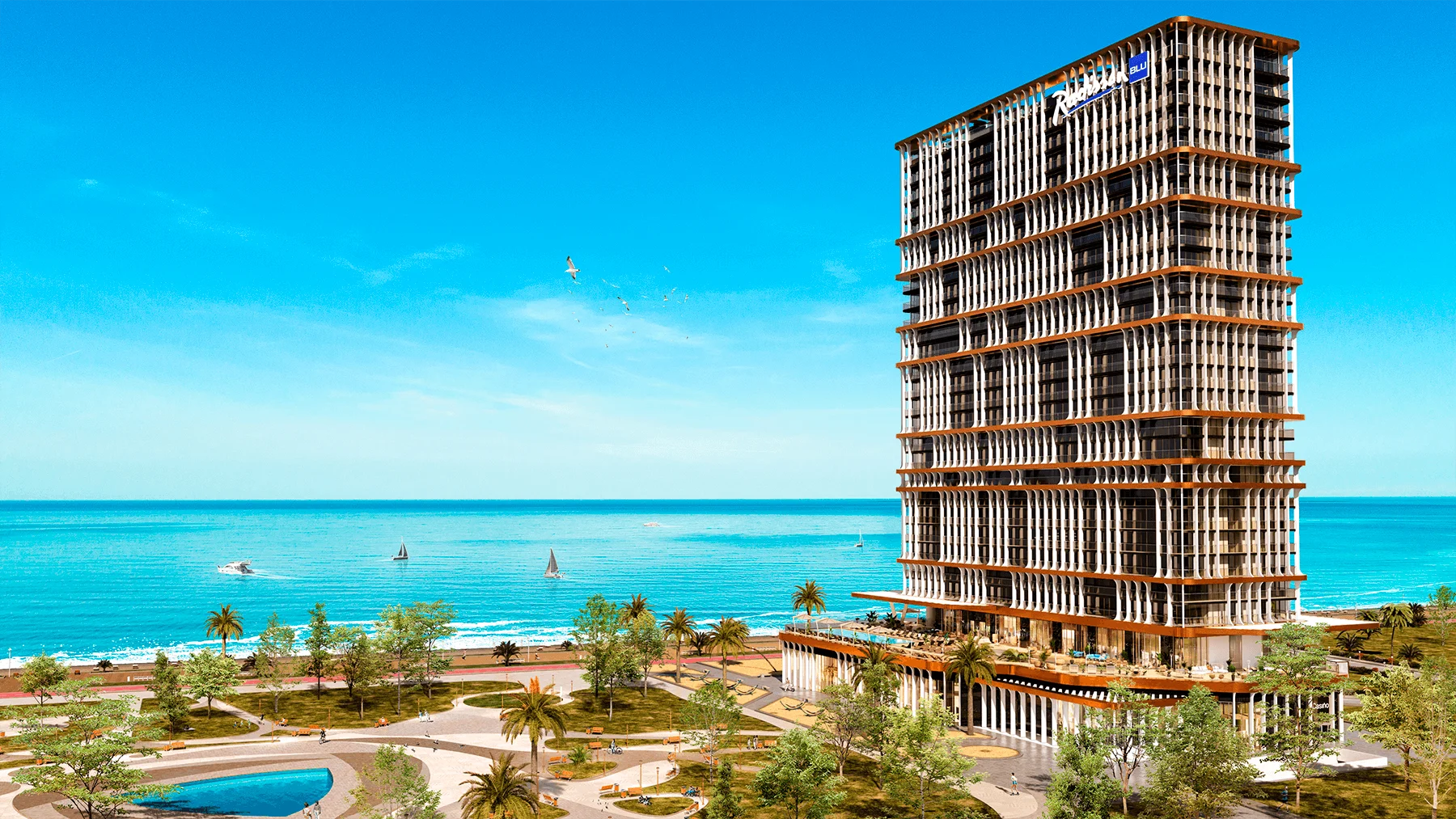
The Radisson Hotel Group is an international hotel company headquartered in Brussels. It has no part in the Next White building. Its connection to this dossier is its partnership with the Next Group, announced in 2022, for the Radisson Blu Resort & Residences, Batumi Gonio: 576 serviced apartments that Next develops and sells under Radisson's brand, and that Radisson's website lists as coming soon. At the announcement, Radisson's vice president for business development in Eastern Europe said: “We are also proud to work with Next Group”.

Radisson's policies page says that everything it does is guided by “principles which our team members and partners must know, follow and respect”. Its Human Rights Policy Statement acknowledges the principles of the Universal Declaration of Human Rights and says that its team members, hotels and contracted parties shall comply with the laws that apply where they operate. Its Code of Business Ethics (2025) lists respect for the law first among its ten principles, declares that “RHG has no tolerance for human rights abuses”, and says that Radisson will not do business with partners, suppliers or other third parties that do not require the same compliance with the law from their own people. Its Responsible Business Report 2025 states: “Respect for human rights is foundational to RHG's operations and value chain.”
For those who report a breach, the most specific document is the Supplier Code of Conduct. It requires suppliers to comply with all applicable laws and regulations, forbids them to violate the principles of the Universal Declaration, tells them to respect all local laws and to keep away from illegal or improper practices, extortion and fraud among its examples, and expects them to assess and mitigate the impact of their activities on the local community. Its last section encourages any stakeholder with concerns about the code to take them up with the supplier or, where that is not possible or appropriate, with Radisson: through the Ethics Hotline for concerns about business ethics at one of its properties, and by email to responsible.supplychain@radissonhotels.com for everything else. It then says what happens next: “the Supplier will be asked to comment”, Radisson may request an improvement plan, and a supplier unwilling to correct the issue can be terminated as a supplier or referred to the local authorities. The report is to be kept confidential as far as possible, and retaliation against whoever made it is not tolerated.
The fine print is narrower. The Supplier Code of Conduct binds suppliers, a word it does not define, though Next develops the property that carries Radisson's brand. The Code of Business Ethics applies to Radisson's own officers, team members and agents and to the hotels Radisson owns, leases or manages, and it presents its hotline as a channel for employees. The Human Rights Policy Statement commits Radisson to endeavor to promote human rights “within its sphere of influence”; it names no channel for complaints and no remedy. None of these documents says what Radisson requires of a developer that sells apartments under its brand in respect of the people who own apartments in that developer's other buildings.
On November 1, 2026, I sent a report to the address given in the Supplier Code of Conduct, copying Radisson's Responsible Business address and Next's director, Levan Otarishvili. It described the exclusion from the elevators as a means of collecting the waiver and payments, the falsified documents I refused to sign, how Next sought their signatures and the payment extracted before my renovation could begin, with a link to this dossier. It asked four questions:
- Whether the standards of the Supplier Code of Conduct, or equivalent ones under Radisson's human rights policy and code of ethics, apply to the developer of a Radisson-branded property, and if they do not, what standard of conduct towards the owners of its residences Radisson requires of such a partner;
- Whether Radisson considers the conduct described a breach of those standards;
- What Radisson's procedure is when a stakeholder documents such conduct by a partner, and what it would do in this case;
- Whether the letter would be registered through the Ethics Hotline, and whether I would be told the outcome.
I asked for a reply within 14 days. As of November 22, 2026, three weeks later, I have received none: no acknowledgement, no answer to any of the four questions, and no word on whether Next was asked to comment.
The silence can be read in two ways:
- If the standards do not apply to a partner like Next, the answer to my first question would have been one sentence. It would also mean that the principles Radisson's partners are said to be bound by are, for the developer of a 576-apartment building under Radisson's brand, not written anywhere a reader can find them.
- If they do apply, then the procedure Radisson describes was either not followed or followed without a word to the person who reported. The code says that the supplier will be asked to comment. It promises the stakeholder it invites nothing, not even an acknowledgement.
None of this is a breach of an obligation towards me. Radisson did not exclude me from my home, and its documents give me no claim on it. What it shows is how little stands behind what a customer reads. On those pages, Radisson has no tolerance for human rights abuses and its partners must respect its principles. When the crimes Next has committed against me were put to it, with the evidence, at the address it publishes for the purpose, nothing came back. In 2022, Radisson said it was proud to work with the Next Group. In 2026, it has not said whether it minds how the Next Group treats the owners of the buildings it has already delivered.
Besides the hypocritical virtue-signaling, what I object to is the invitation: a published address and a described procedure, which cost the reporter the work of making a report accurate, and which in my case led nowhere.